Have you ever considered that the assets of your small company in Jeddah or your factory in Riyadh might be the real key to determining your market value to investors? In the complex Saudi business world, where financial systems are rapidly evolving (like the e-invoicing system in Saudi Arabia) and competition is intense, the question, “Asset Concept: What are Assets and Their Types?” is fundamental. Every entrepreneur needs an accurate answer.
Assets are not just numbers in a bank account or a building you own; they are the backbone upon which the balance sheet is built, and the foundation for making financial and investment decisions. From liquid cash and financial investments to real estate and even intangible assets like goodwill, assets represent the economic resources your company owns and is waiting to exploit. How do you differentiate between current and fixed assets? And how do you ensure your accounts align with the requirements of the Zakat, Tax and Customs Authority (ZATCA) in the Kingdom? This comprehensive article will clarify everything you need to know to manage your assets effectively and achieve the required financial transparency.
Asset Concept in the Saudi Business World
Assets are all the economic resources, tangible or intangible, that an institution owns and that have the potential to generate future economic benefits for the company. Simply put, an asset is anything with monetary value that you can sell or use to increase your revenues. Whether you own a small shop in Madinah or a tech startup in Khobar, your assets reflect your financial strength and your capacity for continuity.
To classify an item as an asset in the accounting system, three essential conditions must be met:
- It must result from past transactions or events (e.g., purchase or construction).
- It must be under the control of the company (the company has the legal right to use or sell it).
- It is expected to generate future economic benefits for the company.
Assets and the Balance Sheet: How to Calculate Your Asset Value?
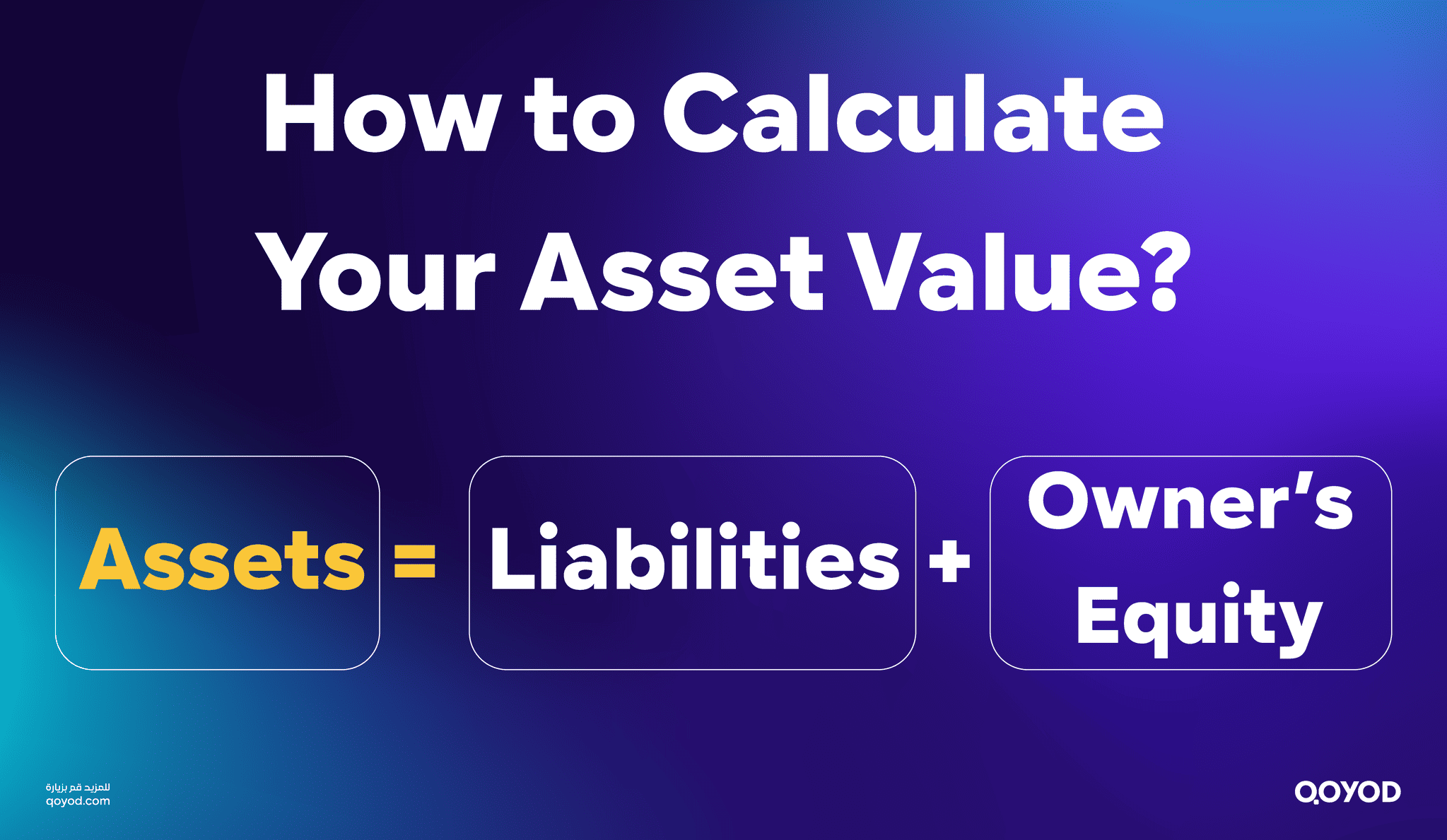
Assets are the fundamental component of the balance sheet equation and the pillar upon which all financial reports rest. The value of assets is calculated by applying the basic accounting equation:
Assets = Liabilities + Owner’s Equity
Assets are recorded on the right or upper side of the balance sheet. They are initially valued at their Historical Cost, which is the actual cost paid to acquire the asset and make it ready for use. A professional accounting software like Qoyod helps you track these values accurately and classify them automatically.
The Relationship Between Assets and Your Financial and Investment Decisions in Riyadh and Jeddah
Asset management is not just an accounting task; it is the basis for strategic decision-making. For example, a company’s decision in Riyadh to purchase a new production line or invest in developing computer software (an intangible asset) depends on:
- Current Asset Structure: Does the company have enough liquidity (current assets) to fund the purchase?
- Expected Rate of Return: Will this new asset add value and increase expected profits enough to justify its cost?
- Borrowing Capacity: Existing assets are used as collateral to finance any new investment, which directly affects the company’s opportunities to obtain funding from Saudi banks.
Types of Assets: Essential Classifications for Understanding the Balance Sheet
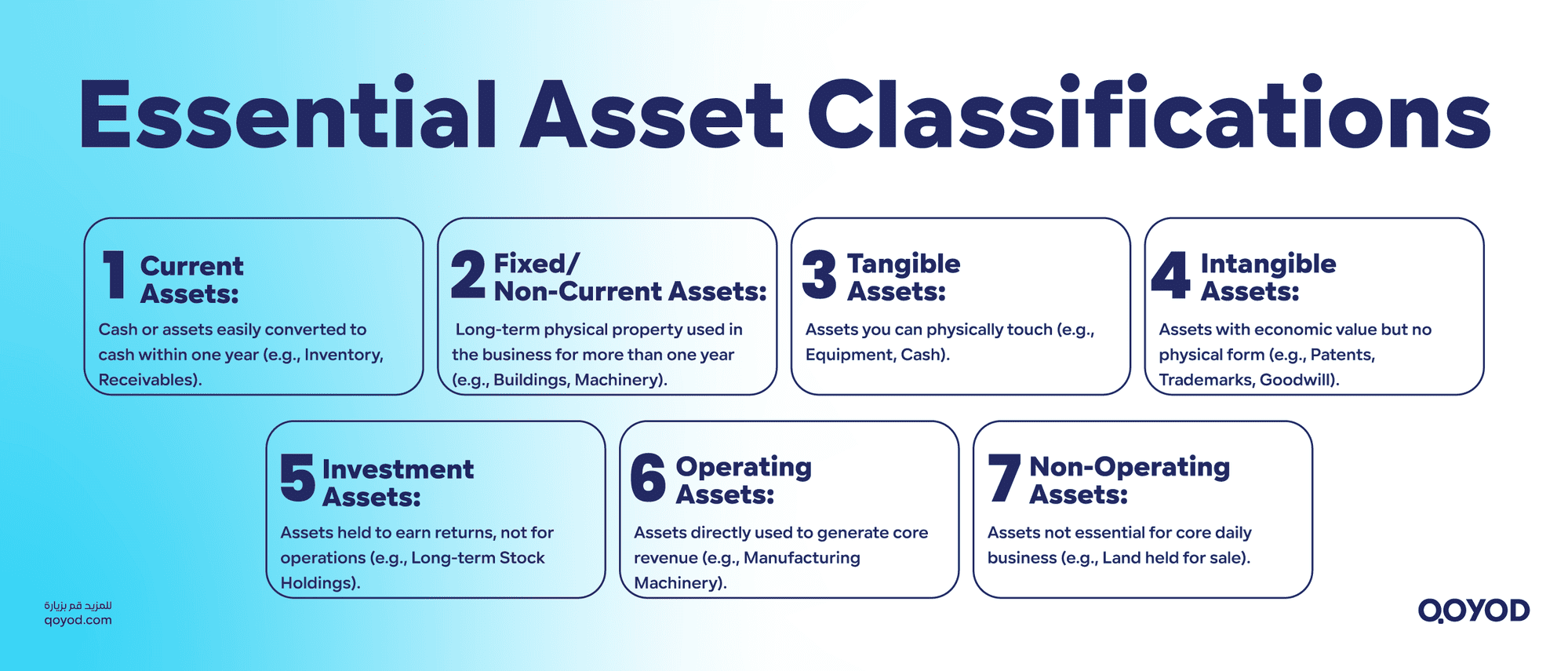
Recording and analyzing assets in a company’s general balance sheet is vital for understanding and assessing its financial position and economic performance. The asset concept represents a basic component of the balance sheet structure, reflecting the resources the company owns and uses to achieve its business objectives. Below is a detailed breakdown of the main asset types:
1. Current Assets
These are assets expected to be converted into cash within one fiscal or operating cycle (usually 12 months). They are an important part of the balance sheet, as they represent the available liquidity of the company and its ability to meet short-term financial obligations.
- Key Features:
- Easily convertible to cash, making their value high in liquidity metrics.
- Essential for covering daily operating expenses.
- Examples of Current Assets:
- Cash balances in banks and petty cash.
- Accounts Receivable (Customers).
- Short-term stocks and bonds (Marketable Securities).
- Inventory (Raw materials and products).
- Prepaid Expenses (e.g., prepaid taxes and insurance).
2. Fixed or Non-Current Assets
These are tangible properties that cannot be easily converted into cash because they are used in the company’s daily operations. They are necessary for running the business and generating income, and are used for long periods, typically exceeding one year.
- Key Features:
- Considered a capital investment for the company, contributing to long-term goals.
- Their value decreases over time due to consumption (Depreciation) and obsolescence.
- Examples of Fixed Assets:
- Land, Buildings, and Real Estate (such as an office in Dammam).
- Equipment and Machinery.
- Furniture and Office Fixtures.
- Vehicles and Cars.
3. Tangible Assets
The tangible asset concept can be classified into several categories based on their physical nature, which can be touched and seen.
- Key Features:
- Can be subject to depreciation and wear and tear over time, requiring maintenance.
- Changes in their market value affect the company’s ability to secure additional financing (like bank loans).
- Basic Classifications:
- Fixed Assets: Such as real estate and equipment.
- Current Assets: Such as inventory and cash.
4. Intangible Assets
The intangible asset concept represents a significant part of the value of companies, reflecting the unique capabilities and knowledge the company possesses. They have no physical substance but hold economic value.
- Key Features:
- Provide the company with a competitive advantage and protect it from competition.
- Companies must protect their rights in them (e.g., trademark registration with the Ministry of Commerce).
- Examples of Intangible Assets:
- Patents and Intellectual Property.
- Trademarks and Copyrights.
- Goodwill (Brand Reputation).
5. Investment and Trading Assets
These assets are aimed at increasing the company’s ability to achieve profits and returns. They are not used directly in the company’s daily operating activities.
- Key Features:
- Can be subject to market fluctuations and value changes.
- Require careful management to achieve desired returns.
- Examples:
- Long-term investments in other companies.
- Stocks and bonds held for investment purposes.
- Real estate and land not used in operating activities.
Current vs. Fixed Assets: A Comparison for Saudi SMEs
This is the most common and important classification, relying on a single time criterion: Will the asset be converted into cash or consumed within one year (12 months) or within the company’s normal operating cycle?
| Comparison Aspect | Current Assets | Fixed Assets (Non-Current) |
| Definition | Assets the company expects to convert to cash or consume within one year. | Assets acquired for long-term use (more than one year) and not for resale. |
| Liquidity | Very High. | Low. |
| Saudi Examples | Cash, Accounts Receivable, Inventory in warehouses in Dammam. | Buildings, Land, Machinery and Equipment, Vehicles (in logistics companies). |
Calculating Current Assets: A Step-by-Step Guide for Saudi Businesses
Current assets are the primary measure of your company’s liquidity and its ability to meet immediate obligations. Calculating them accurately is vital, especially for companies closely tracking their operating cycle in a market like Saudi Arabia.
To arrive at the total current assets, you must aggregate all their main components:
1. Calculate Cash (Immediate Liquidity)
This includes the most liquid assets the company owns:
- Cash in the safe or petty cash.
- The company’s current accounts in local banks.
- Prepaid expenses (e.g., unused prepaid rent).
Practical Example (Riyadh Firm): If the establishment in Riyadh has: SAR 100,000 cash + SAR 200,000 in current accounts + SAR 80,000 prepaid expenses, the total current asset cash is SAR 380,000.
Read also:What is liquidity in accounting?
2. Total Short-Term Investments (Marketable Securities)
This involves summing all investments that can be converted to cash in a short period (usually less than 12 months).
- Stocks and bonds that are sold quickly in the Saudi Stock Market.
- Bank Certificates of Deposit.
3. Current Accounts Receivable (Debtors)
Here, you aggregate all amounts owed to the company by customers or debtors. These assets represent the company’s credit sales and are an indicator of the credit volume it extends.
4. Calculate Inventory Value
The value of the inventory at the end of the period is calculated using the relationship:
Ending Inventory Value = Beginning Inventory Value + Net Purchases – Cost of Goods Sold
Practical Example (Jeddah Company): Beginning Inventory: SAR 200,000; Net Purchases: SAR 300,000; Cost of Goods Sold: SAR 150,000. Ending Inventory Value = SAR 350,000.
5. Aggregate Total Current Assets
To calculate the total current assets, all the previous elements are added together, along with any other short-term assets:
Total Current Assets = Cash + Total Short-Term Investments + Accounts Receivable + Inventory + Other Assets
Important Tip: Track these elements automatically through a cloud accounting software like Qoyod to ensure instant accuracy and avoid errors when preparing annual reports for the Zakat, Tax and Customs Authority (ZATCA) in Saudi Arabia.
Current Assets and Liquidity: Can All Asset Types be Converted to Cash Quickly?
Current assets ensure the company’s ability to pay its short-term obligations (Current Liabilities). However, not all current assets can be converted to cash at the same speed. Although all current assets are relatively liquid, there are degrees of liquidity:
- Immediate Liquidity: Cash in the safe and bank accounts.
- Quick Liquidity: Marketable securities (short-term investments).
- Slower Liquidity: Accounts Receivable (depends on debt collection speed) and Inventory (depends on selling speed).
Determining Asset Cost and Useful Life: The Basis for Correct Depreciation Calculation
To manage your fixed assets smartly, you must start with the basics: accurately determining their cost and expected useful life. This determination is the cornerstone that ensures Depreciation calculations are correct, and consequently, your taxes and book value are calculated according to the accounting standards followed in the Kingdom of Saudi Arabia.
Determining Asset Cost
The cost of a fixed asset is not just the purchase price on the invoice. According to standards, the asset’s cost must include all expenses paid to make the asset ready for use in the company’s operations. Examples include:
- The basic purchase price (e.g., the cost of a new delivery truck in Dammam).
- Transportation and installation costs.
- Initial testing and commissioning costs.
- Customs duties and taxes (to ensure compliance with ZATCA requirements).
Determining Useful Life
The Useful Life is the period over which the asset is expected to contribute to generating revenues for the company. This estimate depends on the nature of the asset, the maintenance policy, and the rate of technological obsolescence in the Saudi market.
Fixed Assets: Saudi Examples and the Impact of Depreciation
Fixed assets are those that serve the company for more than one fiscal year. They are essential for generating operating income.
- Real-world examples: Administrative buildings, factories, drilling machinery in the construction sector, or computer equipment in offices.
How Does Depreciation Affect the Value of Fixed Assets?
Depreciation is the process of allocating the cost of a fixed asset (minus its expected salvage value) over its useful life. Land is the only fixed asset that is not depreciated.
- Accounting Impact: Depreciation is recorded as an annual expense on the Income Statement, which reduces the company’s net income (and thus reduces the Zakat or tax base).
- Balance Sheet Impact: On the balance sheet, fixed assets are recorded at Net Book Value (Historical Cost minus accumulated Depreciation).
Asset Management and Its Importance for Small and Medium-sized Businesses (SMEs)
Asset management is not just record-keeping; it is an organized process of planning for the acquisition, use, maintenance, and disposal of assets to achieve the maximum possible value for the company.
The Importance of Asset Management for Saudi SMEs and its Link to the E-invoicing System
For Small and Medium-sized Enterprises (SMEs) in Saudi Arabia, asset management is critically important for the following reasons:
- Zakat Compliance: Accurate management of asset costs and depreciation ensures the Zakat or tax base is calculated correctly in line with ZATCA requirements.
- Decision Support: Determining whether it is better to buy an asset (ownership) or lease it (financing) to reduce risk and increase liquidity.
- Transparency in Auditing: Good management is the first step toward a successful audit. Linking all purchase and sale invoices related to assets to the e-invoicing system (FATOORAH) mandated by ZATCA greatly facilitates the auditing process.
How to Record and Add Assets in Qoyod Accounting Software?
The method for adding assets in Qoyod is a key accounting process aimed at recording fixed assets in the company’s ledgers.
- Access the Accounting Menu: Go to the Accounting menu in Qoyod.
- Navigate to Fixed Assets: From the Fixed Assets dropdown menu, select “Fixed Assets”.
- Add a New Asset: Click on “Add Asset +”.
- Fill in Basic Asset Data:
- Arabic Name, English Name.
- Reference Number (written or auto-generated).
- Description, Unit of Measure, Tax.
- Asset Value and Salvage Value (if applicable).
- Asset Classification: Choose the classification, which automatically determines the associated accounts.
- Classification Details (for Depreciable Assets):
- Depreciation Method: Straight-line method.
- Useful Life: Calculated by years or percentage.
- Asset Account, Depreciation Expense Account, Accumulated Depreciation Account.
- Save: Click “Save” or “Save and Create New.”
Key Notice for Manual Entries:
It is important to ensure the accuracy of entries in manual journal entries, as they affect the company’s financial statements. If a fixed asset is sold, it will be transferred to the Income Statement, impacting the financial reports.
Accountants and users must pay attention to detail and ensure the correct information is entered in manual entries to guarantee the accuracy and reliability of accounting data, contributing to sound financial decision-making.
Current assets form
If you want to download the current asset form, simply click here.
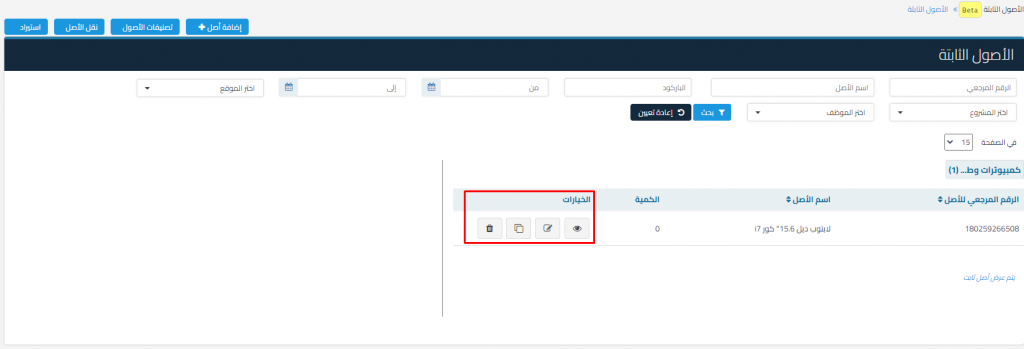
How to add a fixed asset to the Qoyod website
To add a fixed asset to the “Qoyod” website, you must follow organized steps to ensure that all the required data is entered correctly, so here is a detailed explanation of these steps:
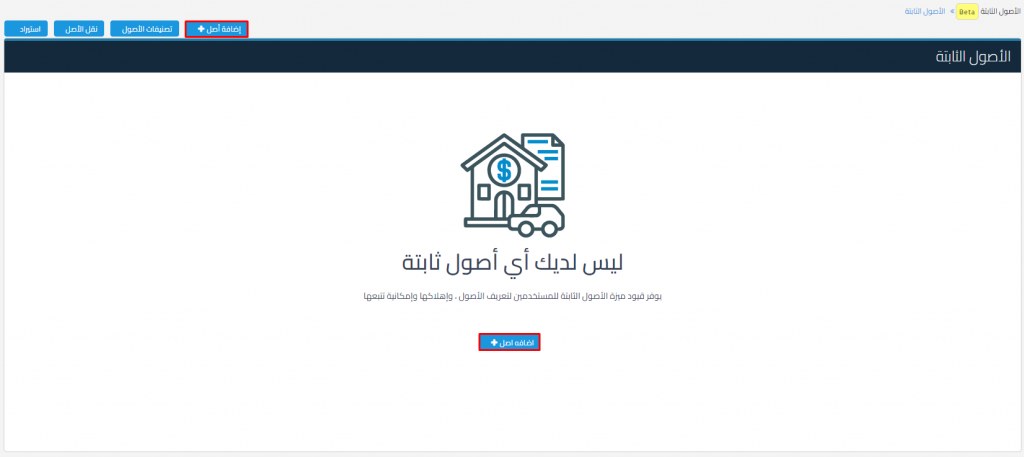
- Accessing the fixed assets page: From the main menu on the “Qoyod” website, choose “Fixed Assets.” A drop-down menu will open for you.
- Click on “Fixed Assets” from this menu to access the fixed asset management page.
- Add a new asset: On the Fixed Assets page, click the “Add Asset” button to start the process of adding a new asset.
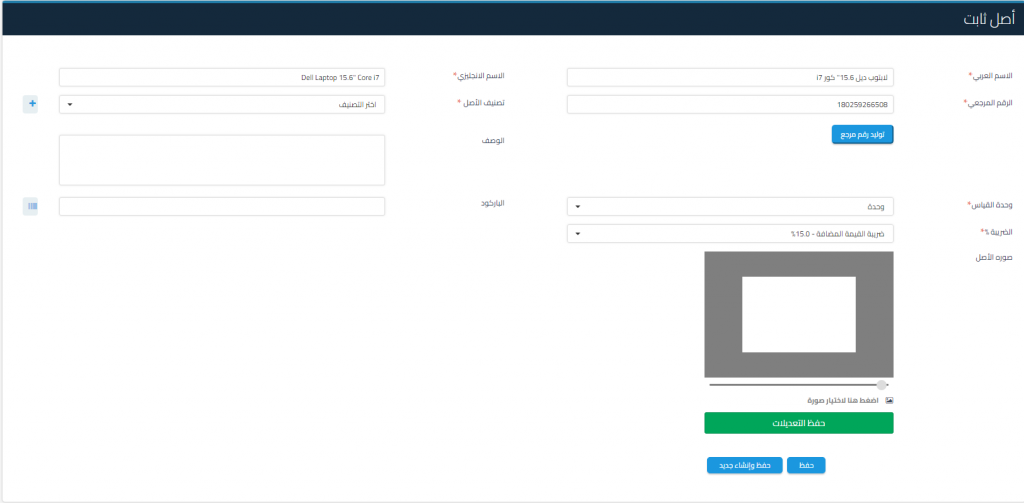
Fill in the basic data for the asset.
- Arabic Name: Enter the Arabic name of the original.
- English: Enter the English name of the original.
- Reference number: You can type a unique reference number for the asset or generate an automatic reference number.
- Description: Enter a detailed description of the asset to explain what it is and its uses.
- Unit of measurement: Choose the appropriate unit of measurement for the asset (such as kilogram, meter, etc.).
- Tax: Specify the tax rate applied to the asset, if any.
- Asset Value: Enter the financial value of the asset.
- Scrap: If the asset has a salvage value after the end of its useful life, enter this value.
Determine the asset classification.
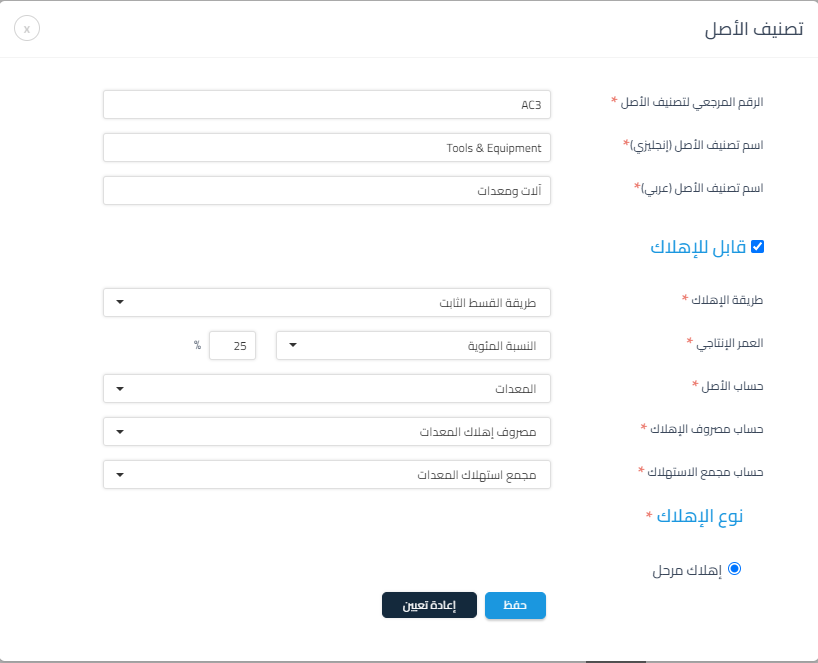
Choose the appropriate classification for the asset from the available list. It is worth noting that the classification helps you link the asset to the appropriate accounting accounts automatically if the required classification does not exist. 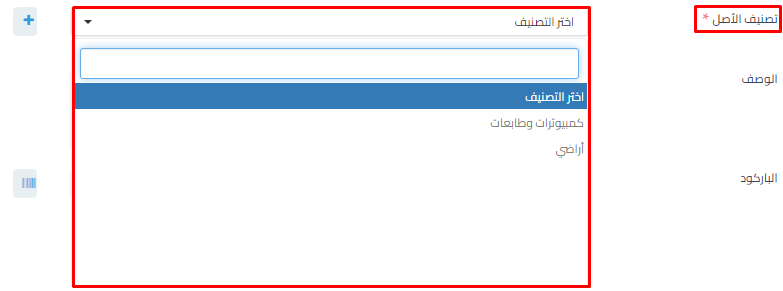
- You can add a new category briefly and fill in its data as needed.
Barcode data entry (optional)
- If the asset has a barcode, tap the barcode icon.
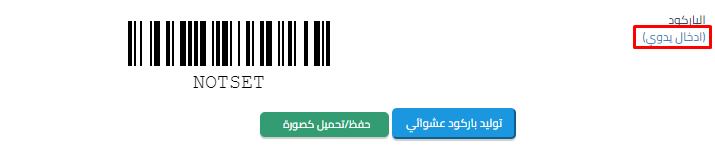
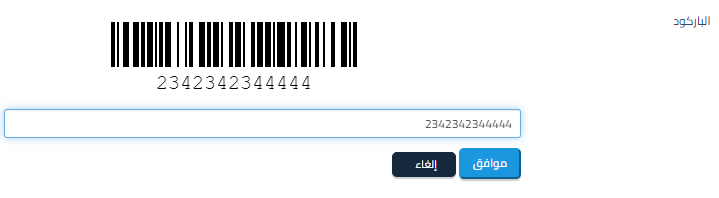
- Choose Manual Entry if you have the barcode typed, and enter it in the designated field.
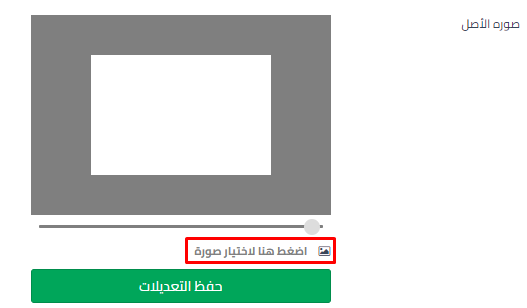
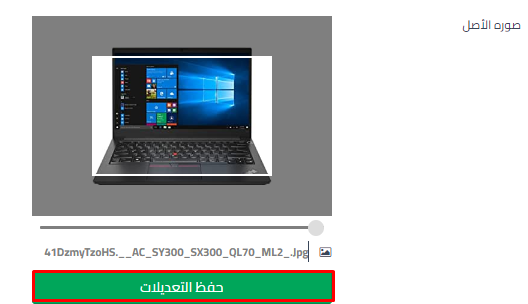
- Add an image of the asset (optional): Click the “Choose Image” option to upload an illustration of the asset from your computer.
Saving data
- After filling out all the required data, click “Save” to save the new asset.
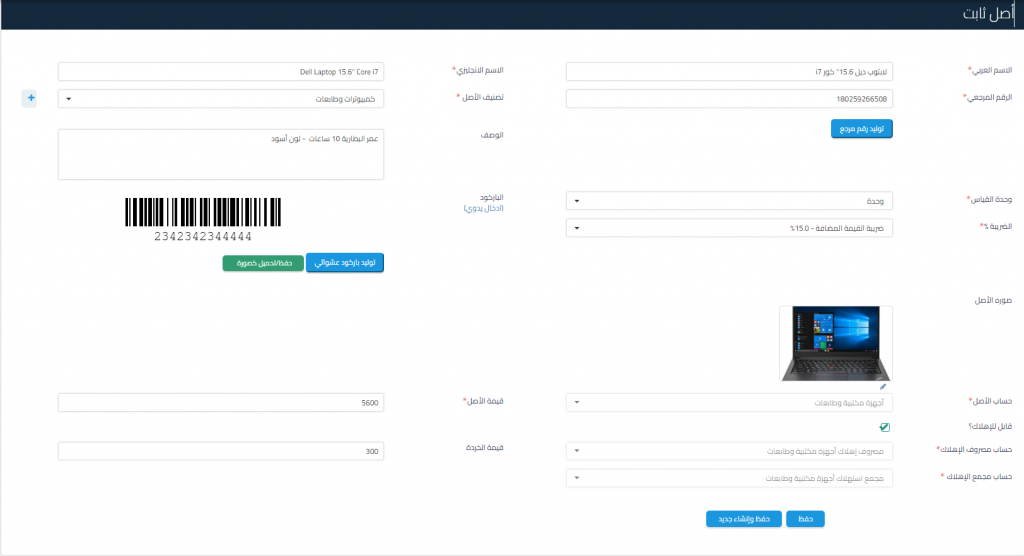
If you want to add another asset after saving this one, you can click “Save and Create New.”
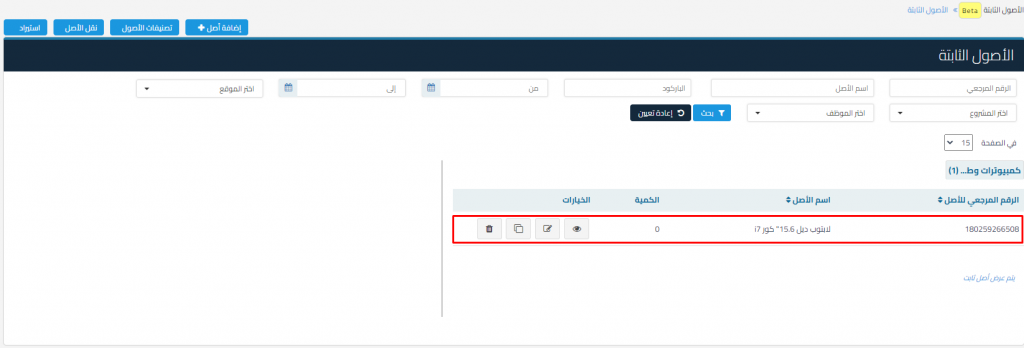
After completing these steps, the new asset will be displayed on the Fixed Assets page, where you can review and update the data when needed. It is worth noting that this procedure ensures that fixed assets are organized and managed effectively within the “Qoyod” system.
Frequently Asked Questions (FAQ) about Assets and Management
What is the difference between current and fixed assets?
Current assets are those expected to be converted to cash or consumed within one year (like cash and inventory). Fixed assets are long-term properties used for more than one year (like buildings and machinery).
How is the value of assets calculated on the balance sheet?
The initial value is calculated at Historical Cost (purchase price + all necessary costs to prepare it for use). Total assets must equal the sum of liabilities and owner's equity.
What are intangible assets, and why are they important?
Economic resources without physical substance (like Trademarks and Patents). Their importance lies in giving the company a competitive advantage and protecting its intellectual capabilities.
How does depreciation affect the value of fixed assets?
Depreciation gradually reduces the asset's value on the balance sheet by being recorded as an annual expense. The asset appears on the balance sheet at Net Book Value (Cost minus accumulated depreciation).
Why is asset management important for businesses?
Essential for ensuring Zakat and tax compliance with ZATCA, providing accurate information to support investment decisions, and facilitating the audit process.
How are assets classified in accounting software?
They are classified through the Chart of Accounts into main categories (Current, Fixed, Intangible), with a sub-account dedicated to each type to automatically track its value and calculate depreciation via the software (like Qoyod).
What is the relationship between assets and financial decisions?
Assets are the primary indicator of financial capacity. They are evaluated to determine the ability to finance, provide necessary collateral for borrowing, and decide if a new investment (asset purchase) will achieve the required return.
Does the book value of fixed assets equal their market value?
Rarely. Book value is based on historical cost minus depreciation, while market value is the actual current price in the market (variable).
Conclusion
Current assets constitute a vital part of the financial stability and commercial success of any company, and it is worth noting that by understanding and managing these assets effectively, companies can improve their cash flows, reduce financial risks, and enhance their ability to invest in future opportunities. We must not forget that monitoring and analyzing these assets remains an essential step towards achieving sustainable growth and excellence in competitive markets. Therefore, financial managers and business owners should give these assets sufficient attention to ensure optimal performance and be prepared to face potential financial challenges.
It is worth noting that the Qoyod platform, which is the best accounting program in the Kingdom of Saudi Arabia, helps you add fixed assets through it, and it also provides electronic invoice systems as well as point-of-sale systems, warehouses, customers, etc.
Dear reader, after knowing what current assets are, try Qoyod now for free for 14 days. It is an accounting program that impresses everyone who uses it with results they never dreamed of.
Join our inspiring community! Subscribe to our LinkedIn page and Twitter to be the first to know about the latest articles and updates. An opportunity for learning and development in the world of accounting and finance. Don’t miss out, join us today!
Useful Sources and References
- 🔗 Zakat, Tax and Customs Authority (ZATCA)
- 🔗 Saudi Ministry of Commerce
- 🔗 Capital Market Authority (CMA)